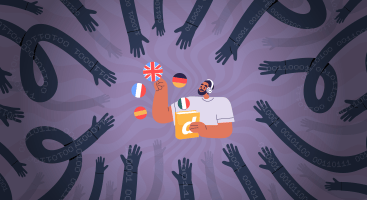
So-called ‘Pay or Okay’ systems are on the rise in Europe. Instead of giving users a choice to either accept or reject ad tracking, Pay or Okay systems require a payment if you want to refuse to give your “consent”. This nudges 99.9% of users to consent, even if they actually don’t want to do so. Given the upcoming guidelines by the European Data Protection Board on this highly controversial approach, noyb has commissioned a study about user choices.
Background. Having to pay a fee or agree to being tracked for targeted advertising is a choice that many online users have to make these days. Over the last few years, news media websites, Facebook, Instagram and many others have started to use such a Pay or Okay system to increase their consent rates up to 99.9%. By aggressively pushing users towards ‘consent’, they expect to earn a bit more money than they would with an ordinary cookie banner. This led to a heated discussion, with some calling Pay or Okay the “executor for ‘free’ consent”.
Political and emotional discussion. In April 2024, the European Data Protection Board (EDPB) then published its first opinion on Pay or Okay. In it, the EDPB suggested that users should not only have two (“pay” or “consent”) but three options (“pay”, “consent” or “advertising, but no tracking”). Meta tried to sue the EDPB over this opinion, while many news outlets claim that they need Pay or Okay for economic reasons. But what about the users and their wishes?
Pay or Okay user study. The law requires that users have a “genuine or free choice”. To find out if this right is respected, noyb has commissioned an academic study about user choices. Even though participants did not need to make any real payments during the study, the results are still clear:
- When asked openly, only about 2 out 10 people agree with companies collecting and analysing their data.
- However, when they face “pay” and a “consent” option, about 9 out of 10 people chose “consent”. The high consent rate seems to be caused by the lack of a reasonable alternative.
- Finally, when there’s a “pay”, a “consent” and a “advertising, but no tracking” option, most users switch to the latter. 7 out of 10 people then choose the “advertising, but no tracking” option.
This shows that the “third option” (as suggested by the EDPB) is supported by objective evidence: Users accept funding of websites via advertising – but not online tracking.
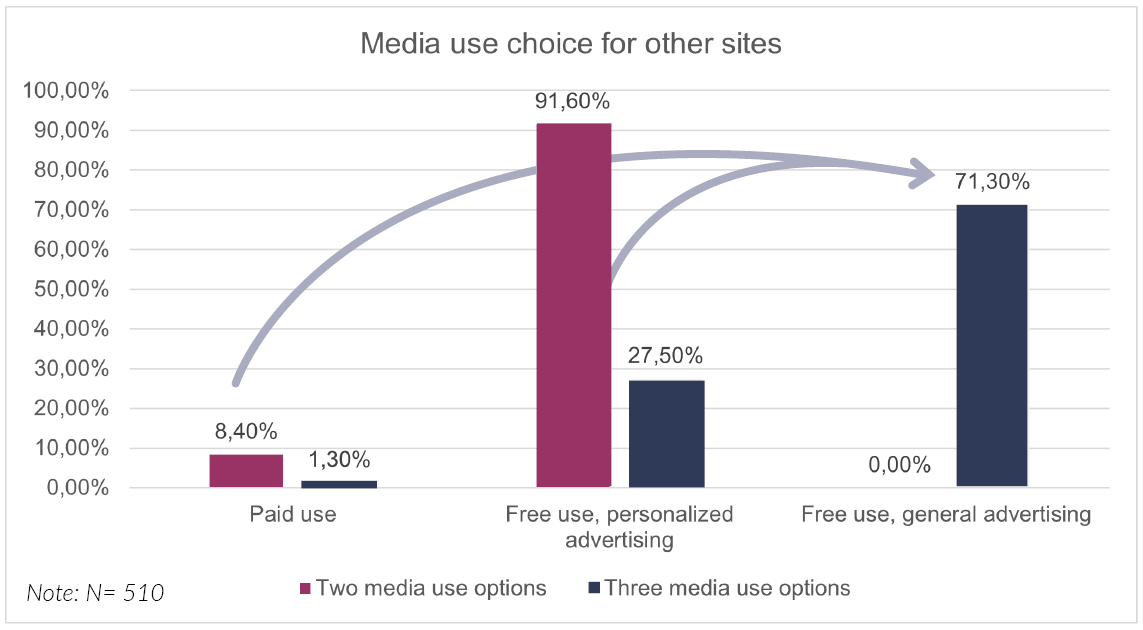
No difference between different sites. The study also shows that users do not behave differently depending on whether they are on large social networks, journalistic pages or other websites. Therefore, there is no factual basis to treat these websites differently and, e.g., create different Pay or Okay guidelines for media websites than for social media.
“Privacy fee” vs “paying for a service”. With Pay or Okay, users are required to pay a privacy fee if they want to retain their right to online privacy. While website providers can, of course, ask for payment in exchange for access to content or a service they provide (like Netflix for TV shows or Spotify for music), Pay or Okay systems try to charge users for their data protection rights without compensation. Unfortunately, even the French Data Protection Authority confuses this, referencing a survey in a bid to support Pay or Okay.